
Food Intolerances: When Eating Makes You Sick
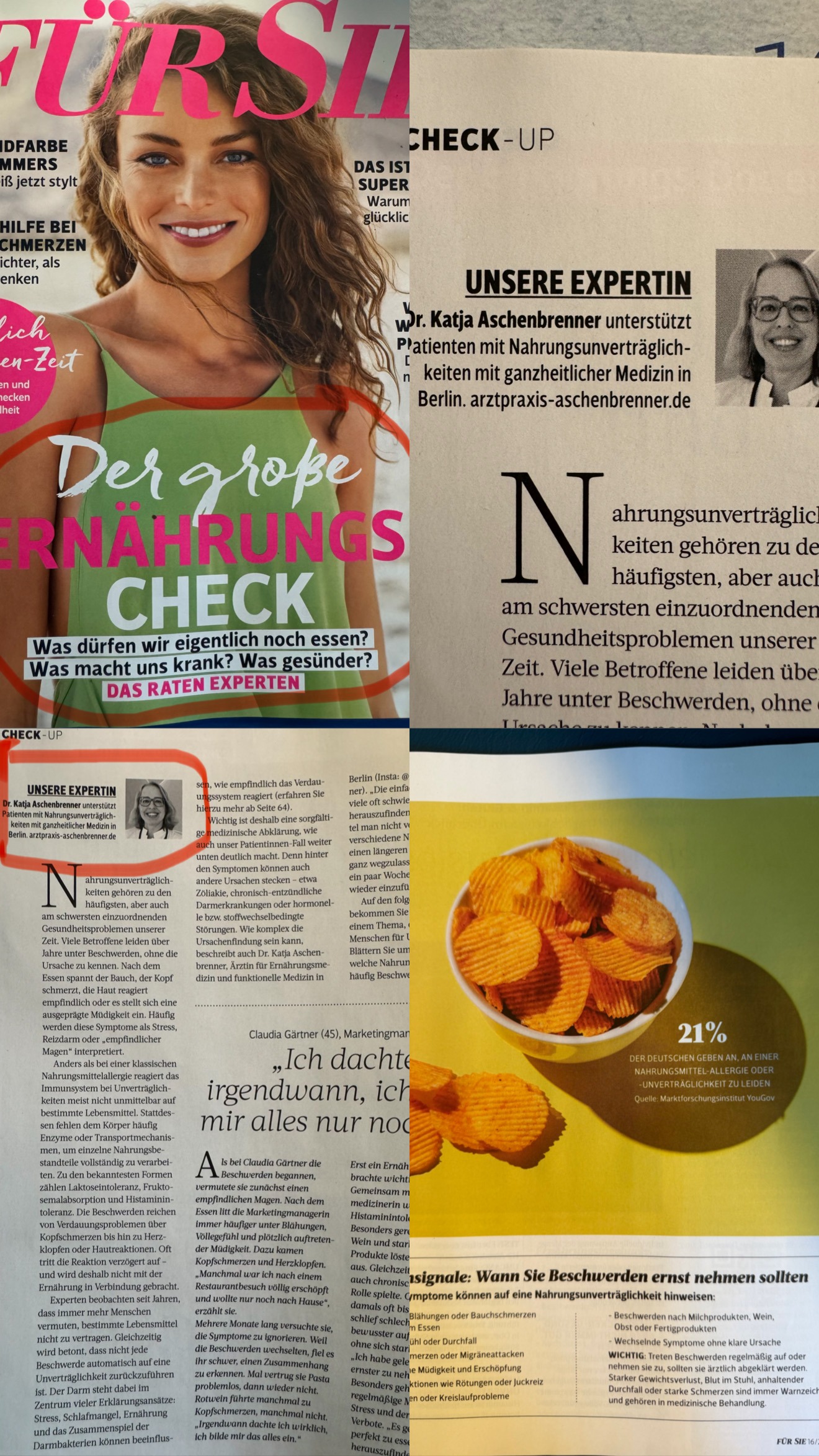
I was featured as an expert in FÜR SIE (16/2026): why lactose, fructose, histamine and gluten so often trigger symptoms, what role the gut and microbiome play — and how I evaluate and treat intolerances holistically.
Table of Contents
Introduction
After eating, the abdomen feels tight, the head aches, the skin turns sensitive, or a sudden tiredness sets in: many of my patients suffer from such symptoms for years without knowing the cause. In the current issue of the magazine FÜR SIE (16/2026), I had the opportunity, as a physician for holistic and functional medicine, to comment on the subject of food intolerances. In this article, I summarize what matters most from my holistic point of view — building on what I have already described in my two detailed interviews (Part 1 and Part 2).
Why More and More People Are Affected
Symptoms that often go unexplained for years
Food intolerances are among the most common health problems today — but also among the hardest to pin down. In surveys, around one in five people in Germany report suffering from a food allergy or intolerance. The tricky part: the reaction often appears only after a delay and is therefore not linked to the meal at all. In my practice, I see again and again that those affected search for an explanation for a long time and eventually even begin to doubt themselves. At the same time, not every complaint after eating is automatically an intolerance — which is precisely why a careful evaluation matters so much to me.
An Intolerance Is Not the Same as an Allergy
The difference lies in how the body reacts
Unlike a classic food allergy, in an intolerance the immune system usually does not react immediately. Instead, the body often lacks the enzymes or transport mechanisms needed to fully process certain food components. The consequences range from digestive complaints and headaches to palpitations or skin reactions. Because the symptoms are so nonspecific and often appear with a time lag, they are difficult to attribute in everyday life — and this is exactly where my holistic approach begins.
Warning Signs You Should Take Seriously
When a medical evaluation is important
Signs that may point to a food intolerance include, among others:
- frequent bloating, a feeling of fullness, or abdominal pain after eating
- diarrhea or fluctuating digestive complaints
- headaches or migraine attacks
- sudden tiredness and exhaustion
- skin reactions such as redness or itching
- a racing heart or circulatory problems
- changing symptoms with no clear trigger
What matters to me: if symptoms occur regularly or increase, they belong in the hands of a doctor. Significant weight loss, blood in the stool, persistent diarrhea, or severe pain are always warning signs and must be investigated medically without delay.
The Four Most Common Triggers at a Glance
Each form calls for a different approach
Four triggers stand out in everyday life in particular: lactose, fructose, histamine, and gluten. They act in very different ways and each requires its own diagnosis and treatment. It is therefore worth taking a closer look rather than prematurely cutting out entire food groups.
Lactose intolerance
Lactose intolerance is the best-known form. It is caused by a deficiency of the enzyme lactase, which breaks down milk sugar in the small intestine. When undigested milk sugar reaches the large intestine, gases form, along with complaints such as bloating, abdominal pain, or diarrhea. The diagnosis can usually be confirmed with an H2 breath test. Complete avoidance is rarely necessary — many of those affected tolerate small amounts well, or fermented products such as yogurt and hard cheese.
Fructose malabsorption
In fructose malabsorption, fruit sugar can only be absorbed to a limited extent in the small intestine. Typical symptoms are bloating, a feeling of fullness, and abdominal cramps. Here, too, an H2 breath test helps with the evaluation. The amount and combination of foods are often decisive: those affected frequently benefit from a time-limited reduction followed by a gradual reintroduction. Incidentally, fructose is found not only in fruit but also in juices, sweets, and processed products.
Histamine intolerance
Histamine is a natural messenger substance found in many aged or fermented foods — such as red wine, cheese, or salami. In histamine intolerance, the body breaks histamine down less effectively. This can be diagnosed through a blood test, and I also like to work with food diaries. A low-histamine diet can ease the symptoms, but it should, wherever possible, be time-limited and medically supervised.
Gluten: not every sensitivity is celiac disease
Gluten is a storage protein found in wheat, rye, and barley. Celiac disease is an autoimmune condition in which gluten damages the lining of the small intestine. Alongside it, there are people with non-celiac gluten sensitivity who develop symptoms without any detectable autoimmune disease. What matters to me: before gluten is avoided permanently, celiac disease should be ruled out through blood tests and, if necessary, a biopsy. A gluten-free diet is only truly worthwhile once the diagnosis has been confirmed.

The Gut as the Key
Why gut health and the microbiome are decisive
In my view, there is almost always more behind food intolerances than a reaction to a single food. The gut plays a central role — and especially its interplay with the microbiome, the trillions of microorganisms that live within it. Everything we consume acts on these gut bacteria, and conversely, our gut health influences how well we digest and tolerate foods. If the body is continually supplied with a food it cannot tolerate, this can lead to inflammatory reactions and, over the long term, to increased permeability of the intestinal wall — the so-called “leaky gut.” For me, caring for the intestinal lining and maintaining a vital microbiome are therefore at the very core of my therapy.
Stress and the Gut–Brain Axis
Why symptoms increase during stressful times
The gut is in constant exchange with the brain — this is known as the gut–brain axis, or the “abdominal brain.” Through it, emotional strain has a direct effect on digestion. Among my patients, I frequently see that symptoms increase markedly during stressful phases of life and ease during a relaxing vacation. Stress of any kind, including emotional stress, has a powerful effect on our gut; conversely, the stress of travel, changing surroundings, or jet lag can noticeably worsen intolerances. Why I deliberately include stress and emotional blockages in the treatment is something I explain in detail in my interview.
Holistic Diagnosis: Causes Instead of Symptoms
Why conventional medicine often finds no clear cause
In classic conventional medicine, the question in the foreground is often which single food triggers the symptoms — and how to avoid it. My holistic approach goes further: I ask about the causes. Laboratory diagnostics alone frequently find no clear explanation, because many intolerances are not based on a single, measurable marker but on an interplay of gut health, nutrition, stress, and lifestyle. That is why I take the time for a thorough medical history and a broadly based diagnostic workup.
My Treatment, Step by Step
From a thorough medical history to individualized therapy
When someone comes to my practice with a suspected food intolerance, I begin with a thorough medical history and a broadly based diagnostic workup. On this foundation I build an individual, often longer-term therapy that requires patience and the active participation of the person affected. Depending on the case, the components include a targeted elimination diet, measures to regenerate the intestinal lining and stabilize the microbiome, detox approaches where needed, carefully selected dietary supplements, and — for example in lactose intolerance — replacing the missing digestive enzymes. Where it makes sense, I work together with other specialists such as nutritionists or psychologists. What this path looks like in concrete terms is something I describe step by step in Part 2 of my interview.
What You Can Do Yourself
The food diary and the elimination diet
The simplest and, for many, at the same time the most difficult method of finding triggers is the elimination diet: consistently leaving out individual foods over a longer period and then, after a few weeks, reintroducing them step by step. A simple food diary is a great help here — over two to three weeks, note what you ate and drank and when, which symptoms occurred, and how your stress and sleep were. A systematic approach is important: don’t change everything at once, but test what actually triggers symptoms. It often turns out that small amounts are tolerated well and that strict avoidance is not necessary at all.
My Contribution in FÜR SIE 16/2026
Holistic nutritional medicine in Berlin
I was delighted to be featured as an expert on the subject of food intolerances in FÜR SIE (issue 16/2026). In my Berlin practice, I support patients with holistic and functional medicine — with the goal not only of easing symptoms but of understanding their causes. If you suspect that you cannot tolerate certain foods, or if you suffer from unclear symptoms, I am glad to support you personally. You can also find more about my approach on my page on the treatment of food intolerances.
Conclusion
Food intolerances are common but multifaceted — and they can rarely be reduced to a single food. Anyone who takes their symptoms seriously, observes them carefully, and has them evaluated by a doctor has a good chance of finding the triggers and significantly improving their quality of life. The gut and its microbiome play a key role in this. What matters to me is this: it is not about eating perfectly, but about finding out what personally does you good.

Important note:
The blog articles serve general education and information. They cannot and are in no case intended to replace medical advice, diagnosis or treatment. You should therefore not use the information provided here as your sole source for health-related decisions. If you have any symptoms, you should always seek medical advice. Source: The article “Wenn Essen krank macht” appeared in the magazine FÜR SIE, issue 16/2026 (CHECK-UP section, from p. 59); text: Kathrin Mechkat. I was interviewed and quoted in it as an expert. All rights to the original article remain with the publisher. This article represents my own independent perspective on the topic, based on my interviews (Part 1, Part 2) for the health website Medpertise.de.

Blog „Lebendig Lang Leben“
How can you get healthy? How can you stay healthy? The holistic physician and author Dr. Katja Aschenbrenner shares insights from her practice on modern holistic medicine, gut health, hormones, Ayurveda, and everything that keeps us alive and well — for everyone who wants to understand their health and strengthen their vitality for the long term.

About Dr. med. Katja Aschenbrenner
I am Dr. med. Katja Aschenbrenner. When no one else can find the cause, that is where my work begins. I help people suffering from constant exhaustion, unclear symptoms, or chronic illnesses through holistic and functional medicine.
Connect with me
Stay up to date and connect with me on social media.
More posts
Was ist ein Mastzellaktivierungssyndrom (MCAS)?
Bis zu 17-20 % der Bevölkerung könnten von einem Mastzellaktivierungssyndrom (MCAS) betroffen sein. Erfahren Sie, welche Beschwerden dahinterstecken können, was sie auslöst und wie MCAS erkannt und behandelt wird.
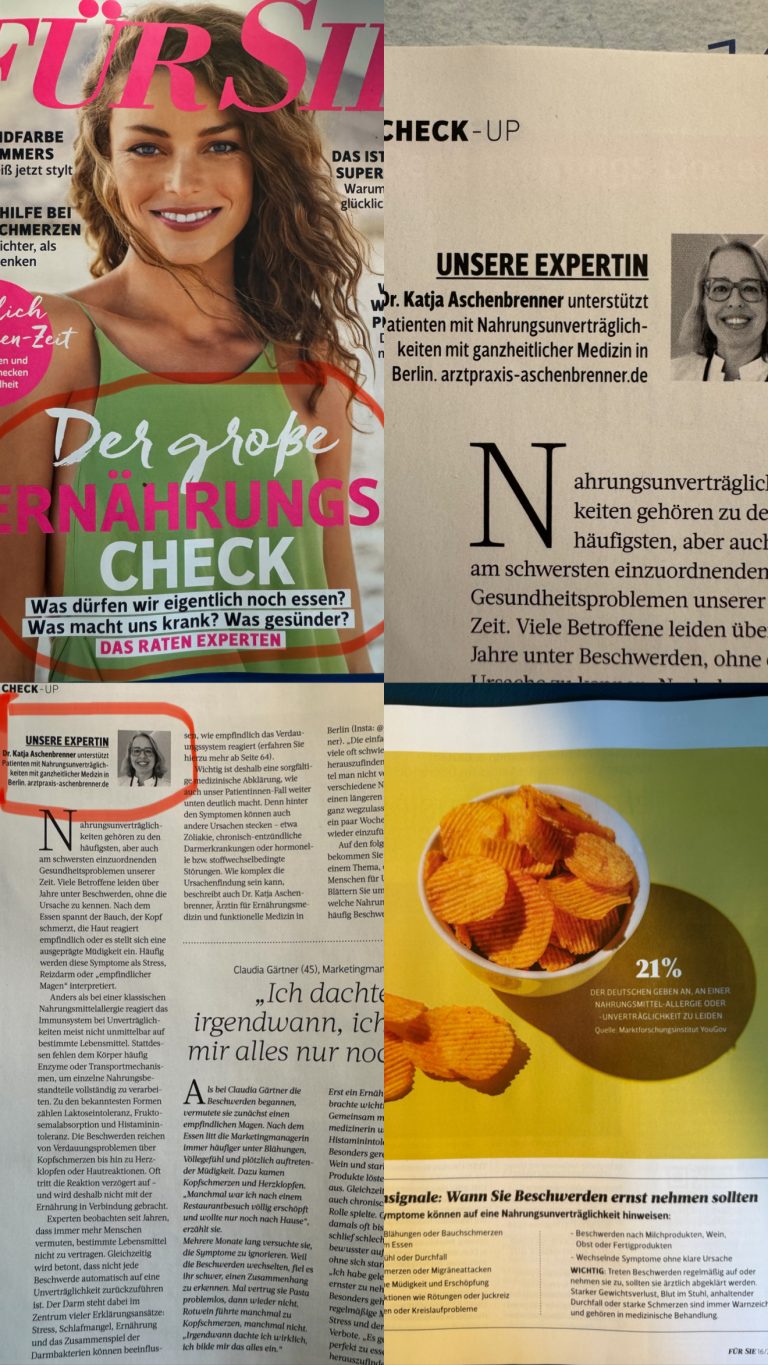
Nahrungsmittel-unverträglichkeiten: Wenn Essen krank macht
Dr. med. Katja Aschenbrenner als Expertin in der Zeitschrift FÜR SIE 16/2026: Nahrungsmittelunverträglichkeiten wie Laktose-, Fruktose- oder Histaminintoleranz ganzheitlich erkennen und behandeln.

Zeckenstich und chronische Beschwerden: Warum Sie Zecken ernst nehmen sollten
Zeckenstiche werden oft unterschätzt. Erfahren Sie, warum nicht nur Borreliose und FSME, sondern auch weitere Erreger wie Bartonellen oder Babesien langfristige Beschwerden auslösen können. Wir erklären, welche Warnzeichen Sie nach einem Zeckenstich ernst nehmen sollten und wie Sie sich wirksam schützen. Für mehr Sicherheit in der Zeckenzeit!

Subscribe to the Lebendig Lang Leben blog right here! That way you won’t miss anything and the new issues will come straight to your email inbox.