Introduction
What is protein? How much protein should I eat?
Proteins are the building blocks of our body: without them there would be no muscles, no immune defense, no enzymes. Nevertheless, opinions vary on how much we need each day. The German Nutrition Society (DGE) sets a minimum recommendation of 0.8 g per kilogram of body weight for healthy adults — meaning non-pregnant individuals between 19 and 65 years of age.
Simple formula: 1 g/kg
Why this value is often practical
As a rule of thumb, I recommend 1 gram of protein per kilogram of body weight to my patients. It’s easier to calculate 😉 — and many people can benefit from slightly more protein, for example those who:
- exercise regularly and are physically active. Even moderate strength or endurance training increases the repair needs of muscle tissue.
- want to lose weight. Protein can improve satiety without adding unnecessary calories.
- are older than 65. Natural muscle loss accelerates after age 65.
- are pregnant, children, or adolescents in growth phases, etc.
Calculate your protein needs
And compare
Calculate your personal protein requirement. Then make a list of the foods you typically consumed over the past few days. If you then check the nutrition tables — found on every food package or online — for the protein content of typical foods, you will notice that it is not always easy to meet your daily protein needs.
Example of a high-protein meal
It’s that simple
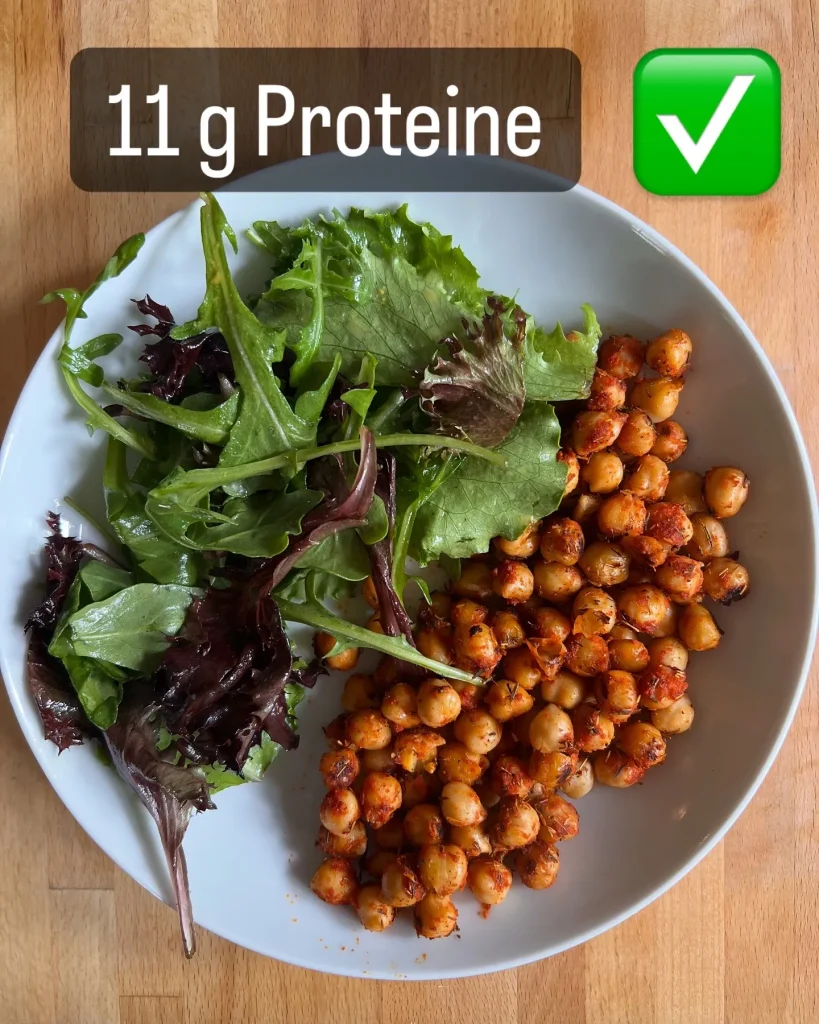
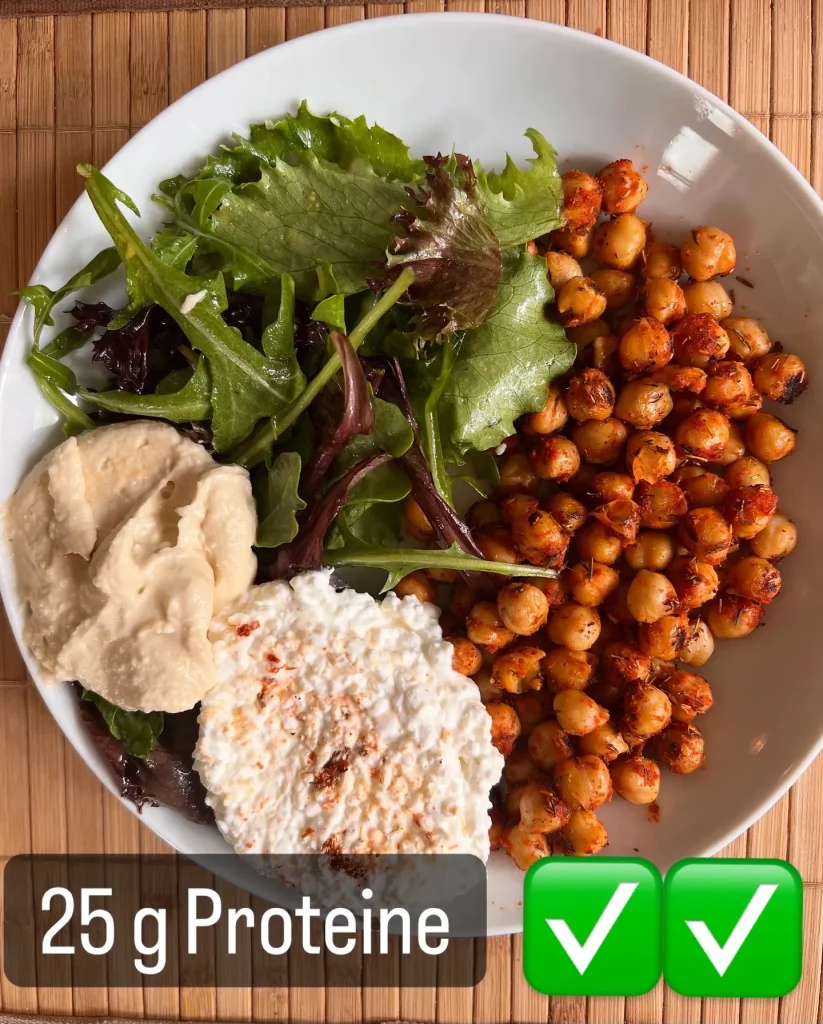
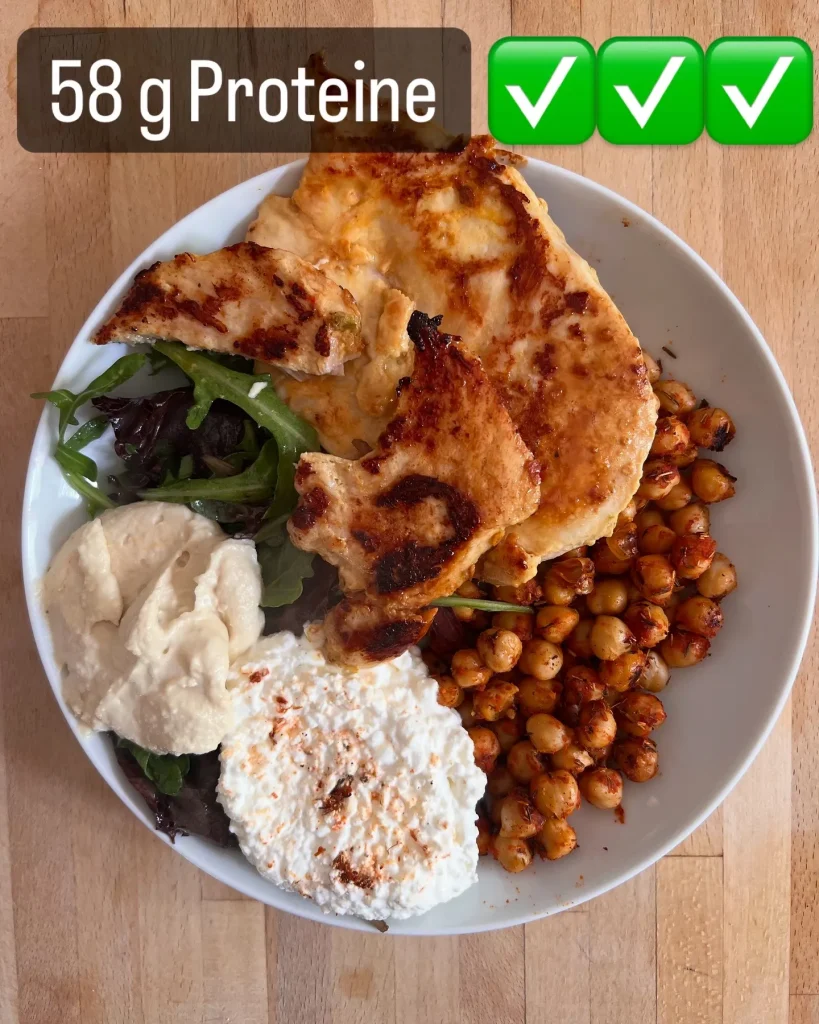
In the photo series, I show how you can increase the protein content of your meal. First, I add protein-rich chickpeas to a salad, which on its own contains relatively little protein.
Next come hummus and cottage cheese. Cottage cheese contains about 12 g of protein per 100 g.
Then I add a pan-fried chicken breast. It provides around 23 g of protein per 100 g and is low in fat.
Vegetarian or vegan diet
The challenge
If you follow a vegetarian or vegan diet, you face the particular challenge of getting enough protein. Animal products especially often contain high amounts of protein. You also need to make sure you consume all essential amino acids. Essential amino acids can also be supplemented if needed.
Many of my patients are vegetarians or vegans. They ensure adequate intake through a variety of legumes, grains, nuts, and similar foods.
Important note:
The content of this blog/newsletter is provided for general informational purposes only and does not replace personal medical advice, diagnosis, or treatment. The information presented here should therefore not be used as the sole basis for making health-related decisions. If you experience any medical complaints, you should in any case seek professional medical advice.
Vibrant Longevity Blog
How can you recover your health? How can you stay healthy?
Holistic physician and author Dr. Katja Aschenbrenner, MD, shares valuable insights from her clinical practice on functional medicine, gut health, hormones, Ayurveda, and everything that keeps us truly alive — for anyone who wants to understand their health and achieve vital longevity.
About Dr. Katja Aschenbrenner, MD
I am Dr. Katja Aschenbrenner. When no one else can find the root cause, my work begins. I support people with persistent exhaustion, unclear symptoms, or chronic illnesses using an integrative and functional medicine approach.
Connect with me
Stay up to date and connect with me on social media.