The interaction between histamine and hormones
The relationship between histamine and sex hormones is complex and bidirectional. On the one hand, hormones can influence the release and effect of histamine in the body. On the other hand, histamine can also influence the production and function of hormones.
Estrogen and histamine
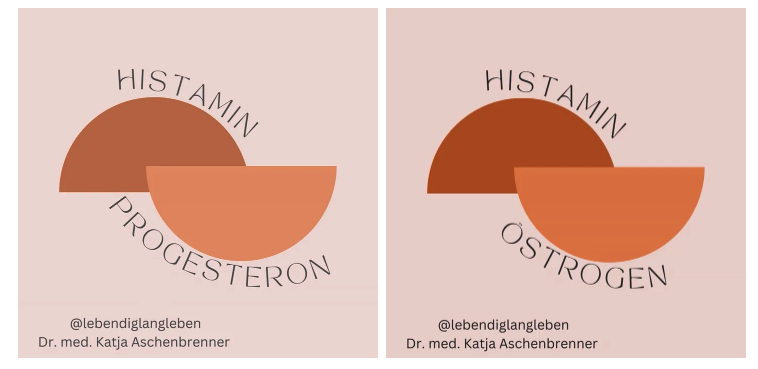
Estrogen can increase the release of histamine and enhance the activity of histamine receptors. This means that women may be more susceptible to histamine-related symptoms during certain phases of their menstrual cycle when estrogen levels are high. This can manifest in the form of allergic reactions, headaches, or even an increased sensitivity to certain foods. During menopause, or especially in the 10 years before the last menstrual period occurs (perimenopause), there can also be strong fluctuations in hormone levels. Sometimes, for example, estrogen (relative to progesterone) is too high and can lead to histamine-related symptoms.
Progesterone and histamine
Progesterone appears to have a moderating effect on the histamine response. It can dampen histamine release and thereby reduce the symptoms of histamine intolerance, MCAS, or allergic reactions. In phases when progesterone levels are low, such as before menstruation or during perimenopause, symptoms such as migraine or skin reactions may therefore occur more strongly.
Progesterone and histamine
Clinical significance and research
The interaction between histamine and hormones is an important area of research, particularly with regard to conditions such as migraine, endometriosis, and allergic diseases, which occur more frequently in women. A better understanding of this relationship could lead to more targeted treatment strategies.
Conclusion for treatment
The connection between histamine and hormones shows how complex the processes in our body are. An imbalance in this system can lead to a wide variety of symptoms and diseases. Therefore, it is important that both patients and doctors are aware of these interactions and take them into account in diagnosis and treatment. In this way, in histamine-related diseases and during certain phases, the targeted use of bioidentical hormones, after weighing the benefits and risks, can be very helpful.
Important note:
The content of this blog/newsletter is provided for general informational purposes only and does not replace personal medical advice, diagnosis, or treatment. The information presented here should therefore not be used as the sole basis for making health-related decisions. If you experience any medical complaints, you should in any case seek professional medical advice.
Vibrant Longevity Blog
How can you recover your health? How can you stay healthy?
Holistic physician and author Dr. Katja Aschenbrenner, MD, shares valuable insights from her clinical practice on functional medicine, gut health, hormones, Ayurveda, and everything that keeps us truly alive — for anyone who wants to understand their health and achieve vital longevity.
About Dr. Katja Aschenbrenner, MD
I am Dr. Katja Aschenbrenner. When no one else can find the root cause, my work begins. I support people with persistent exhaustion, unclear symptoms, or chronic illnesses using an integrative and functional medicine approach.
Connect with me
Stay up to date and connect with me on social media.